
I was devastated to learn that Libre was closing, and that Saturday, 4/4 would be their last night. If you don’t know, Libre was a dessert and cocktail bar with heavy Mexican culinary influence. The cocktails and desserts were truly works of art. It was in my Top 10 of favorite bars/restaurants for sure.
Steve and I had visited Libre many times since they opened in 2023, but it had been too long since our last visit. Even though they were one of my favorites, I hadn’t been worried about their success and longevity, because every time we went in, they were packed. I don’t know what happened, but what we heard from one of the owners was, “Support your favorite small businesses.” Maybe we would have been able to see they were struggling if it had not been so long since we had been in. We did also hear from an employee that the business would be pivoting and reopening at some point, so that’s hopeful.
I had been meaning to take my older daughter to Libre for a long time, so I made a reservation for Saturday night for us and Steve. I’m sad that my youngest will never get to experience it, because she loves desserts but is not 21 yet.
We enjoyed our last evening there, and I’m glad we could experience it one last time.
I don’t know that there’s a widely accepted consensus on why popular businesses end up closing in Portland, but I have a few thoughts. If you’re interested in hearing my economic and political opinions on this topic generally, you can read below the photos.
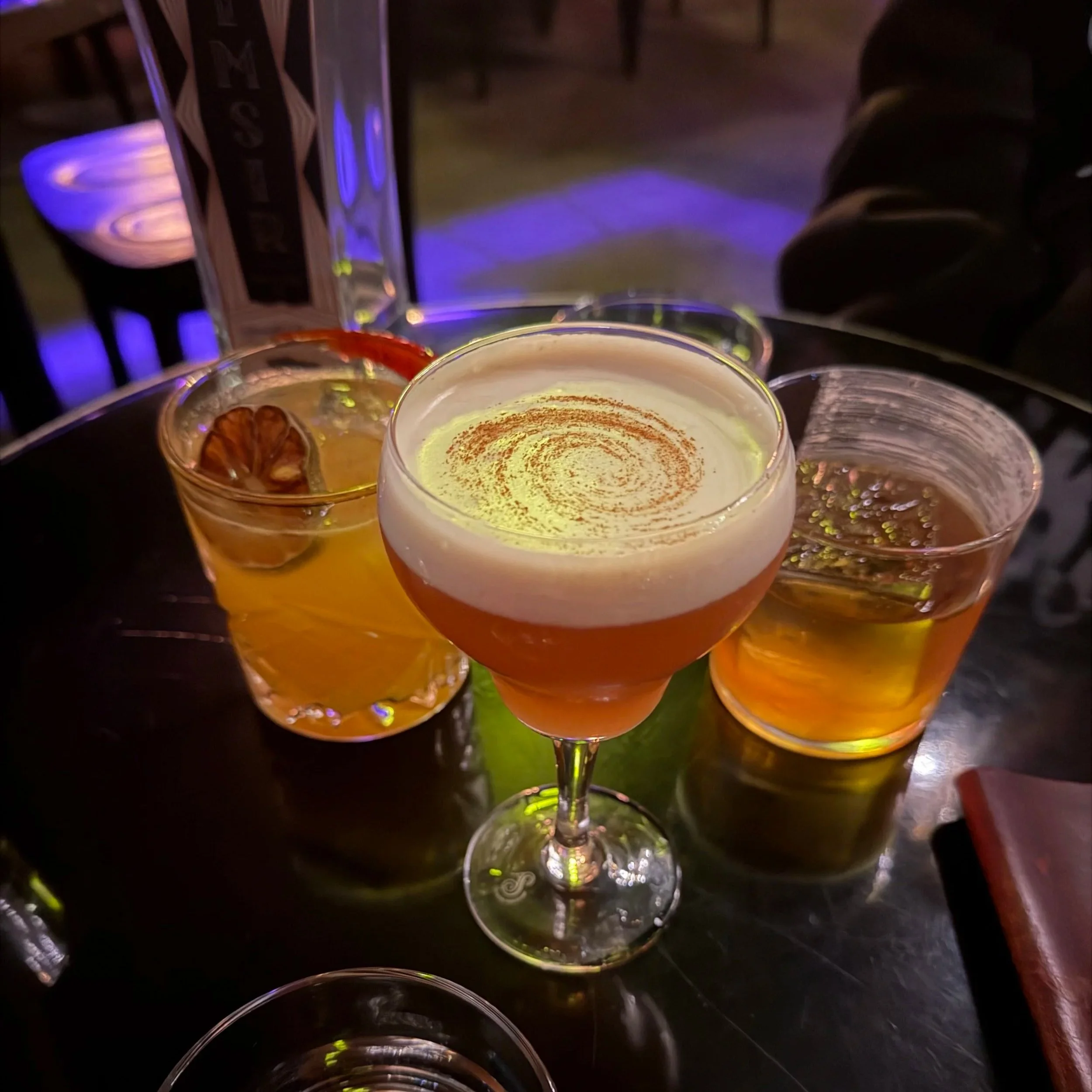
Cocktails, left to right: Fantasia, Nocturna, and Sangre de Dioses.
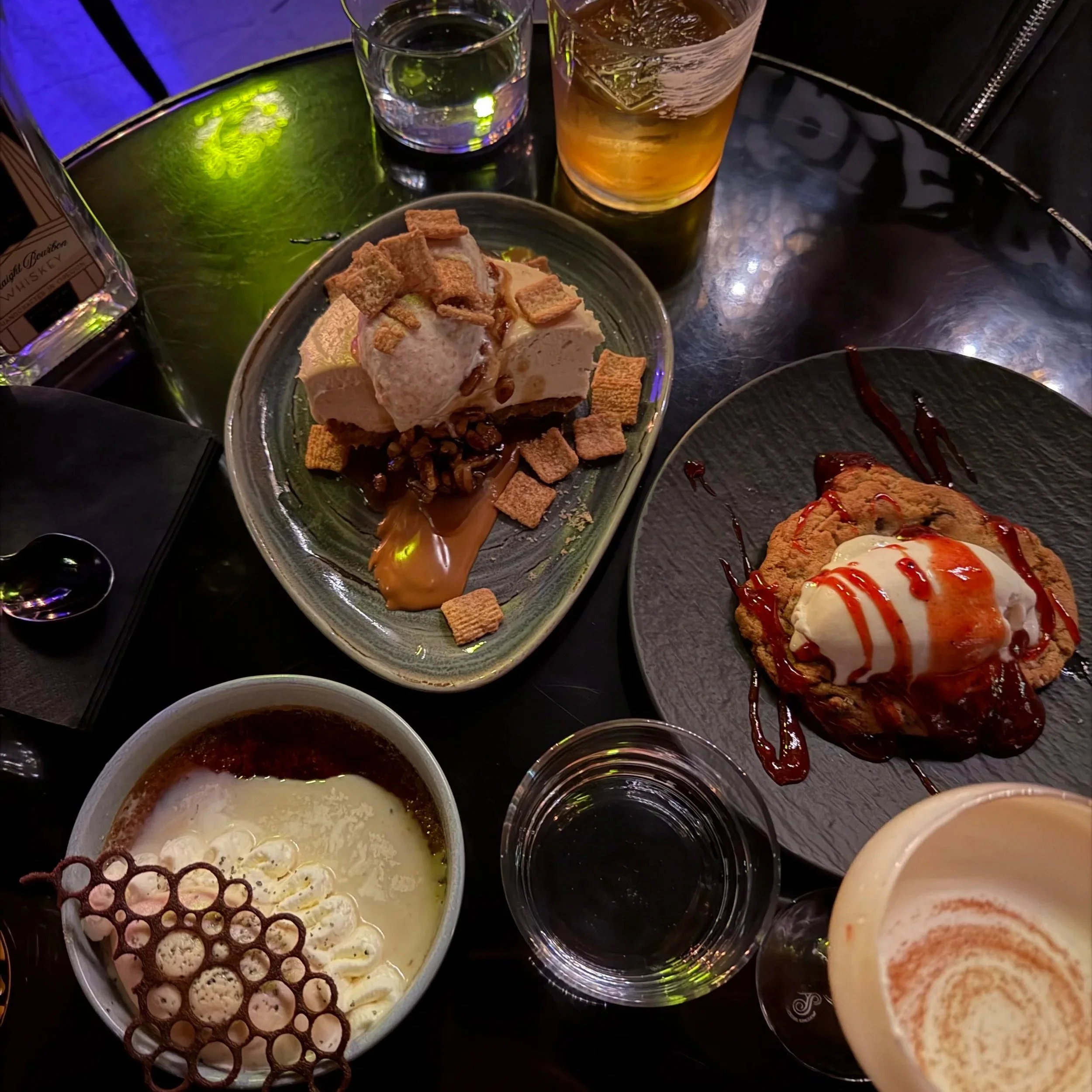
Desserts.
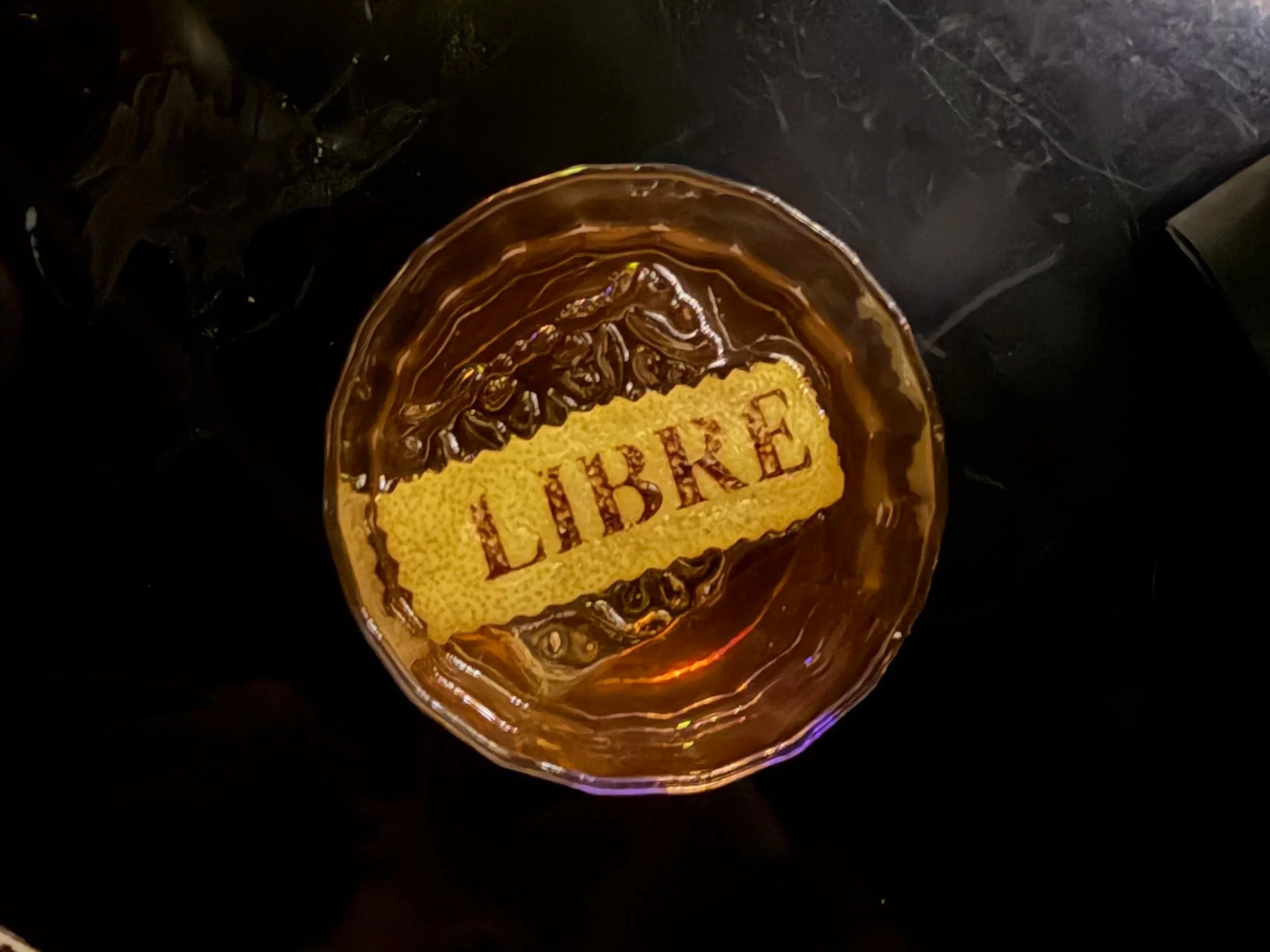
Solara cocktail.
Here are my thoughts on why popular businesses can still struggle in Portland. Just remember: it is a choice for you to read this, and you shouldn’t get mad if you end up getting your feelings hurt here. Economics and politics greatly affect our wine, food, and travel industries, and if you like wine, food, and travel, you should consider whether your political choices help those industries or hinder them.
1. It’s mostly bullshit that Portland’s taxes and progressive politics are bad for business.
There’s a popular narrative that tells us Portland’s taxes are too high, that workers have too many rights here, and that these things are bad for business. This is mostly bullshit. The success of a small business has fuck all to do with taxes or wages; and everything to do with how well the business is managed, how well the business is supported with capital, how well the business markets to it target customer, and how able and willing the target customer is to spend money at that business. I can’t speak to business management or capital for Libre. I do think that marketing to customers directly could have made some difference in how often they came in. I, for one, would have been highly responsive to a text from Libre announcing monthly or seasonal specials and inviting me to make an reservation. I also think it’s possible that a large part of Libre’s target customer base is feeling economically strapped right now. This is mainly based on vibes I pick up when I talk to people around Portland. There have been lot of companies laying people off, and there is an air of uncertainty around the economy because of our reckless administration.
2. Commercial rents here are outrageously high, and commercial property owners have little incentive to lower them.
In the past 10 years or so, I’ve noticed that commercial properties sit vacant for years at a time. I’ve called several of the numbers to inquire about the rent, assuming it would be affordable due to the length of time of the vacancy. Wrong. Commercial property owners aren’t lowering rents to get leases in place. They’re just letting them sit vacant. I assume they can write off the losses and lower taxes for themselves overall. Rents are kept artificially high, and it’s extremely challenging for small businesses to continually bring in enough business to pay the rents. I’d love to see a vacancy tax on commercial space, personally. We should not be rewarding commercial property owners for artificially creating economic sluggishness in Portland.
3. Everyone acknowledges that the restaurant industry is tough, and maybe particularly tough here in Portland.
The restaurant industry has always been tough. You’re asking people to work shit hours, give it their all, under demanding conditions, for very little pay in the grand scheme of things. The work is hard on the body, and turnover is high. You can have a beautiful menu become totally unworkable because one item suddenly experiences poor market conditions. Here in Portland, you have to cater to a customer that has a million other choices on any given day. You’re having to constantly create new menus to keep up. It’s tough, tough work. And God forbid you get sick or have a family emergency.
4. There’s a compounding economic crisis in Portland that’s been building for about 10 years.
Portland was booming until around 2017. We began to suffer a lot of setbacks when that conman asshole had his first presidency and cut funding to many crucial programs in Oregon. These cuts led to increased homelessness, crime, and economic uncertainty. People had less to spend and less to celebrate with a visit to a restaurant. During 2017-2020, Portland also had rightwing agitators coming to our city to antagonize and terrorize the residents. This of course led to counterprotests, and the activity affected Portland economically and mentally. Then the pandemic hit. The creature in charge of the country had dismantled America’s pandemic response team, and he got a million people killed. Thank goodness there were a few adults in charge of Congress at the time to pass a bill allocating funding to businesses and unemployed individuals. Otherwise, we’d have entered a full-on Depression. Many businesses closed during this time. We finally got some relief in 2021 with a new president who expanded funding to healthcare, housing, homelessness, mental health, and infrastructure. We were slowly building back again, making huge strides economically. America’s recovery as a whole was stronger than any other country’s recovery. But for some reason, Americans decided to elect the conman again, even after he tried to overthrow the election and was convicted of 34 felonies. In the first days of his second presidency, massive funding cuts were made just about everywhere.
5. Tariffs, immigration policy, and foreign policy under the current administration have exacerbated economic problems in Portland.
Portland, and America in general, were experiencing a slow but steady recovery until 2025, when the conman who botched the pandemic recovery, killed a million people, tried to overthrow the election, and was convicted of 34 felonies, was somehow elected as president again by inventing a fake immigration problem and getting Americans riled up about 4-5 trans girls who play sports. Funding cuts were immediate. He implemented a chaotic tariff program, which mostly involved rage-tweeting that he’d be enacting tariffs on a country after its leader failed to bend the knee or kiss the ring. He began mass deportations, targeting toddlers, grandmas, workers, and even tourists. There is now a shortage of workers in many industries, and particularly in food and agriculture industries. He also began antagonizing the rest of the world by cutting off funding to poor people, blowing up boats of fishermen, asserting that he could annex foreign countries, and bombing Venezuela and Iran. Tourism has been greatly impacted here in the United States, and in Portland in general. We used to have Canadians visit Portland in large numbers, and now those numbers are nonexistent.
—
So there you have it, my thoughts on small businesses struggling in Portland. Support your favorite local small businesses, and support politicians and political parties who aren’t hostile to the wine, food, and travel industries if you care about those things.