
Molana Wine and Cup of Salvation
We watched Cup of Salvation, ate a Persian meal I cooked, and opened a bottle of Molana Rasheh wine.
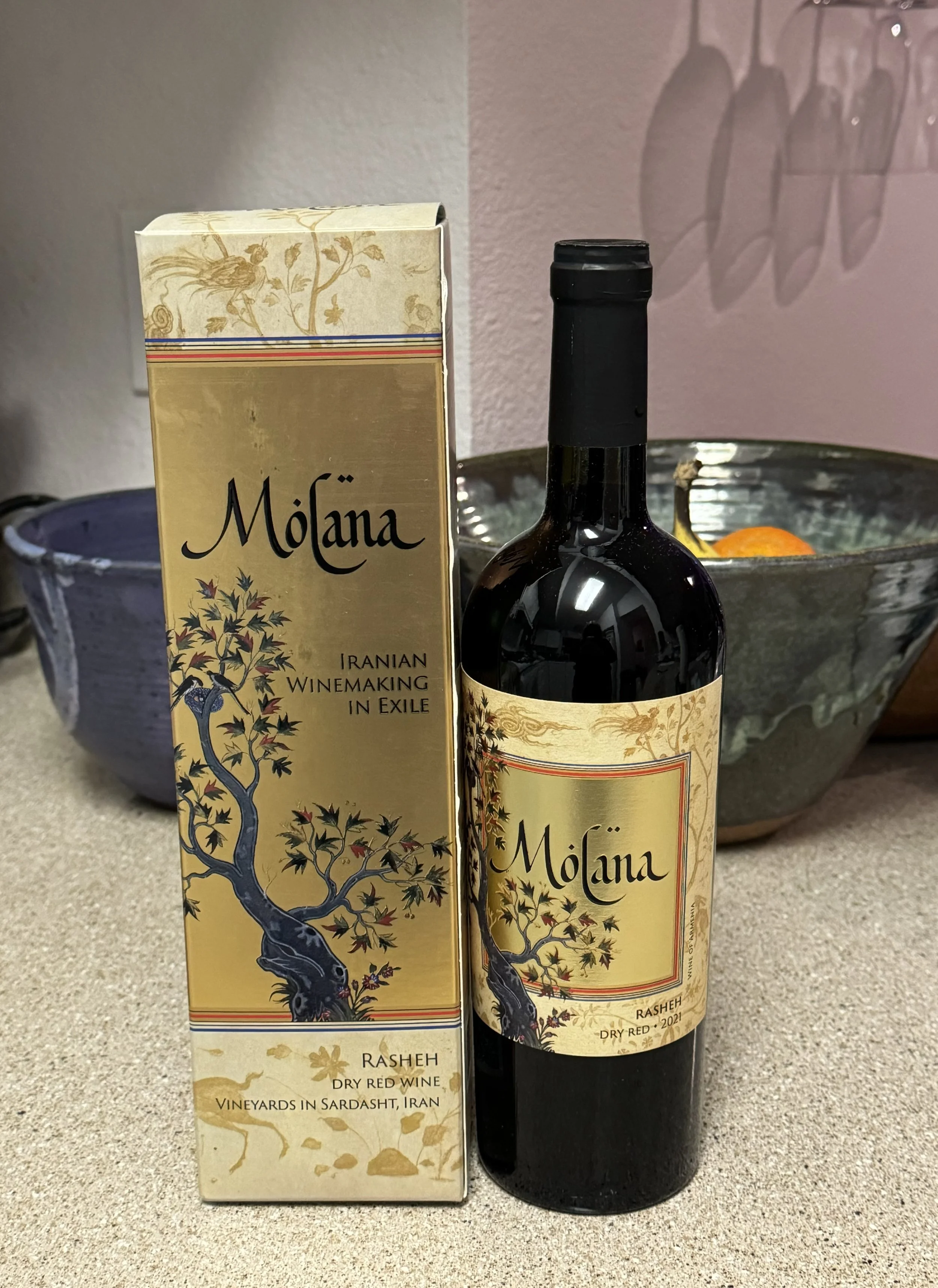
Molana wine, made with Iranian Rasheh grapes in Armenia.
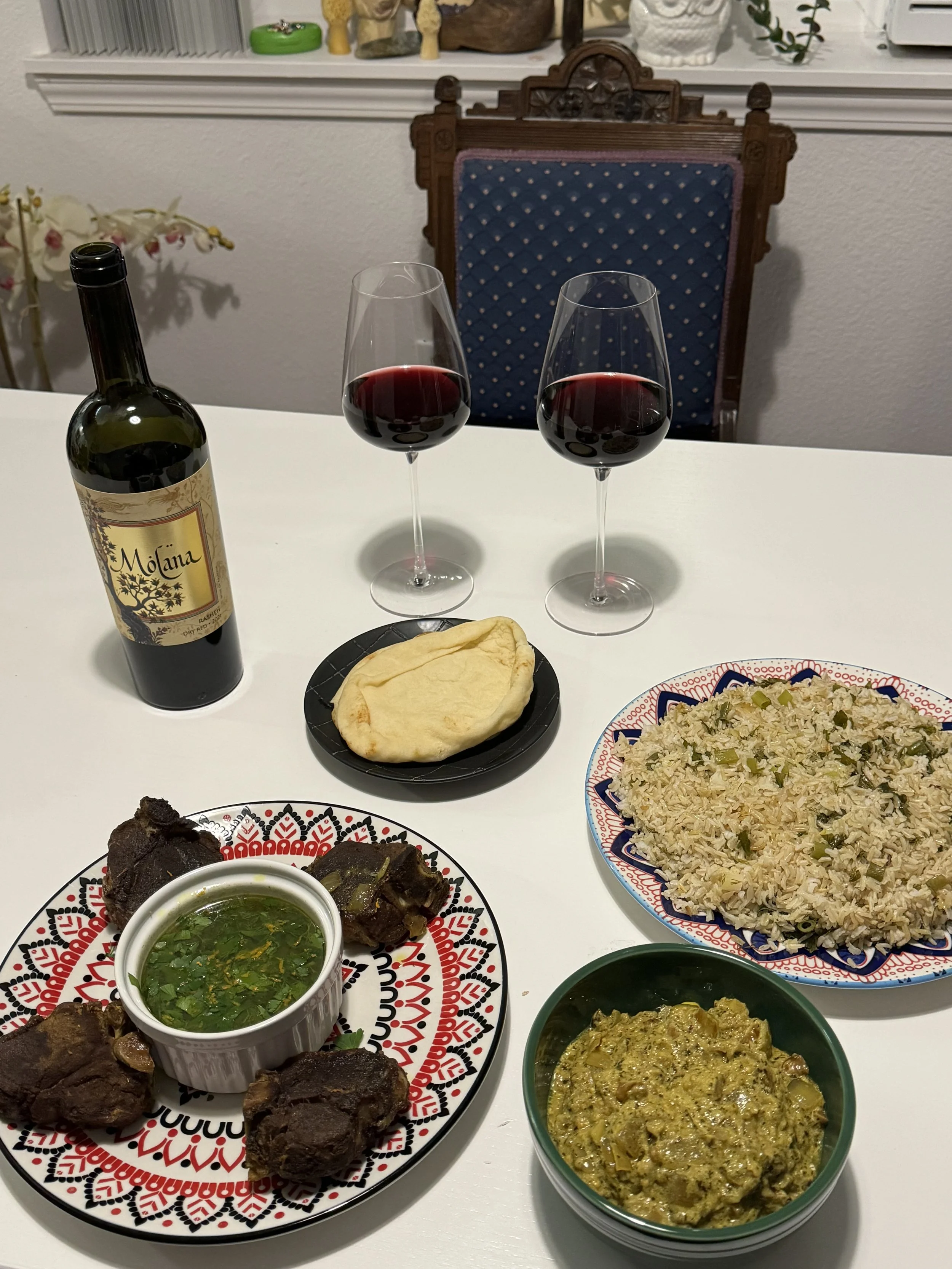
Lamb, herbed rice, eggplant dip, flatbread.
Cup of Salvation is a documentary about the Armenian winemaker, Vahe Keushguerian of Molana, who smuggles Rasheh grapes out of Sardasht, Iran, to make wine with his daughter, Aimee. This is illegal under the religious Iranian regime, and Vahe could face severe penalties if caught. The documentary was incredibly moving, showing the family’s and the people’s cultural and historical ties to vineyards and winemaking. This area comprising northern Iran, Armenia, Georgia, Azerbaijan, and parts of eastern Turkey, is the land where Vitis vinifera, the species most associated with wine grapes, originated. It is a cultural tragedy that this region is not at the center of winemaking and viticulture. War, religion, and authoritarian rule have wiped out a rich culture and history, but extraordinary winemakers and viticulturists feel their connection to culture and history and want to preserve and replenish it.
Wine was a big part of Persian culture for thousands of years. The famous Persian poet, Rumi, wrote much poetry about wine. Molana uses this quote from Rumi in their marketing materials:
“Pour out wine till I become a wanderer from myself; for in selfhood and existence I have felt only fatigue.”
Zoroastrianism was the major religion in Persia from about 1500 B.C.E. until Persians began converting to Islam between the 7th and 11th centuries C.E. Wine was important in Zoroastrian religious ritual and symbolism. Much of Persia began converting from Zoroastrianism to Islam from the 7th century C.E. on, to the point that by the 11th century, something like 90% of Iran was Muslim. Although some interpretations of Islam forbid alcohol consumption, and various rulers prohibited production and consumption, historical evidence shows wine was still a significant part of Iranian culture and daily life. Prior to the 1979 Iranian revolution, there were around 300 wineries in Iran. Today, there are none. After the revolution, the new regime banned alcohol, shutting down wineries and tearing out commercial vineyards.
The existence of the wine is the spoiler you need going into the documentary: Vahe is successful and doesn’t get caught.
The documentary also features the story Moe and Flora Momtazi, owners of Maysara Winery in Willamette Valley, Oregon, and their escape from Iran in 1982 on a motorcycle while Flora was eight months’ pregnant with their daughter, Tahmiene. The Momtazis bought the land that would become their vineyard in 1997, and Tahmiene is now Maysara’s winemaker. There’s an incredibly moving scene in the documentary in which Moe and his other daughter, Naseem, taste the Molana Rasheh wine. Moe is brought to tears as he smells the terroir of his homeland in the glass of wine.
We really enjoyed the documentary and the wine. It was dry, medium-high in acidity, high in alcohol, full bodied, smooth tannins, with lots of fruit—blackberry, cherry, plum—and herbs.
The food was good, but as this was my first time cooking Persian food, it could have been better. My best friend growing up was Iranian. Her family moved next door to mine in 1980, just after they fled Iran due to the regime’s persecution of intellectuals and academics. I moved in with my family that same year as a foster kid (later to be adopted) after my mother died. I was two and my friend was three when we met in these unusual circumstances and became the most troublesome duo on the block. Her mother was Swedish, but she learned to cook all of her father’s favorite Persian foods. When I cooked the herbed rice, it brought back memories of the aromas that would trail out of the kitchen as we watched TV and did homework. The aromas and the memories went well with the wine.